
Solar
Choosing a solar installer in Belgium (RESCert, quotes, pitfalls)
Certification, quotes, warranties, paperwork: what to check before trusting a solar installer with your roof, and the warning signs to look out for.
By the RhinoEnergy advisersUpdated on 6 min read
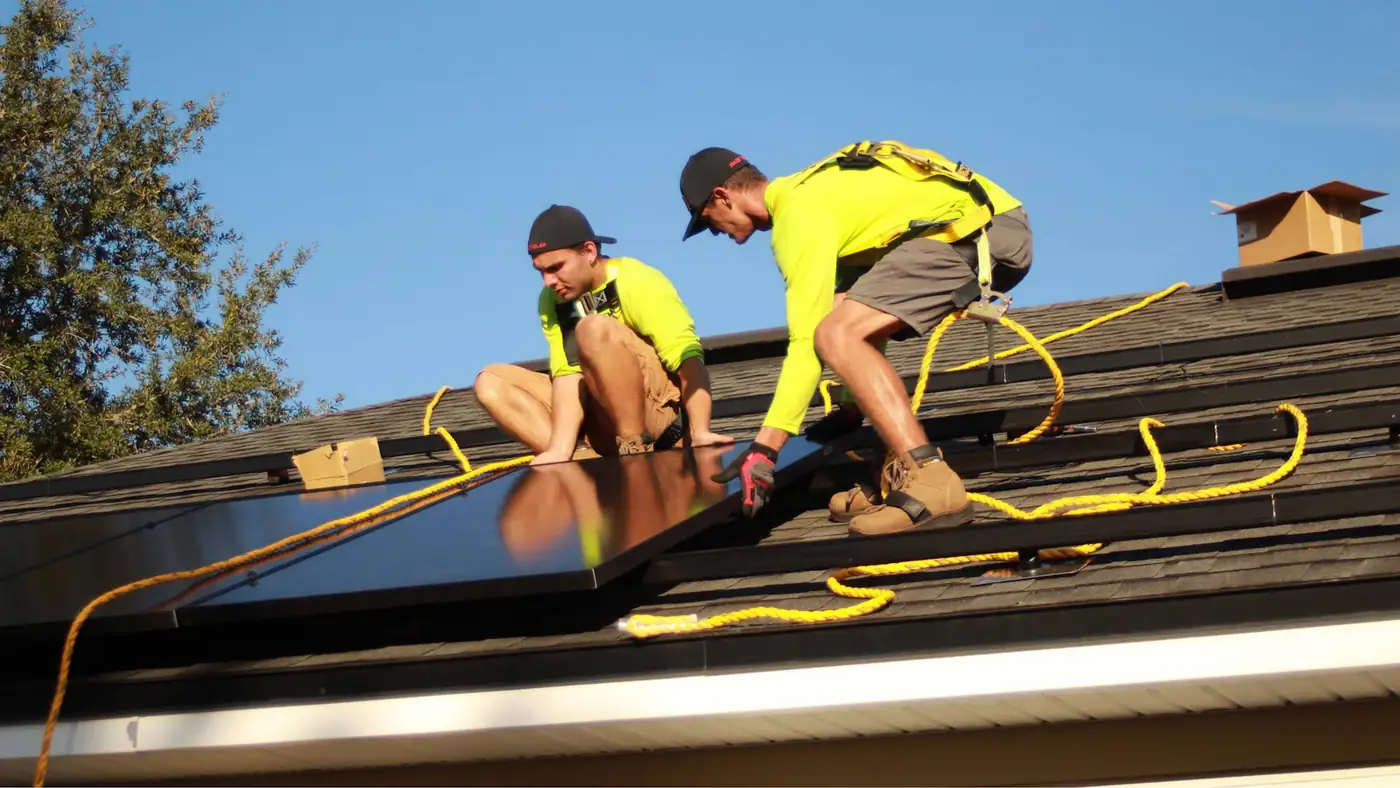
Choosing a solar panel installer in Belgium is as important a decision as choosing the equipment. A solar PV system will stay on your roof for 25 years or more: poor workmanship can lead to leaks, disappointing output or even the loss of certain benefits, such as green certificates in Brussels.
The Belgian market has plenty of reputable firms, but also some very sales-driven companies that rely on urgency and exaggerated yield promises. Here is a simple method for sorting them out: the certifications to ask for, how to read and compare quotes, and the most common traps.
Why RESCert certification has become essential
RESCert is the Belgian certification scheme for installers of renewable energy systems (solar PV, heat pumps, solar thermal, biomass). For solar PV, RESCert PV certification shows that someone in the company has completed specific training and passed an exam. It is recognised in all three regions, is valid for a limited period and must be renewed.
Depending on your region, it has practical consequences:
- in Wallonia, since 2023, companies that design, install or commission solar PV systems must employ at least one RESCert PV-certified person;
- in Brussels, since 1 January 2026, a new system up to 5 kWp must be installed by a RESCert PV-certified installer to qualify for green certificates. Without it, access to regional support may be refused;
- in Flanders, there is currently no general requirement for a standard home system, since no regional subsidy is attached to it any more. Certification nevertheless remains a reliable sign of competence, and it is worth asking for.
The habit to adopt: ask for the name of the certified person and check it against the official list on the RESCert website. For the Brussels details, Brussels Environment has published a note on the new 2026 green certificate measures.
Basic checks on the company
Before you even look at the price, take a few minutes to check the company is sound:
- Its company number: it must appear on the quote. You can check it free of charge in the Crossroads Bank for Enterprises (CBE/KBO/BCE): date of incorporation, registered activities, head office.
- How long it has been trading and how stable it is: a young company is not necessarily a bad choice, but workmanship warranties are only worth something if the installer is still around in ten years.
- Its professional liability insurance, which covers damage caused during the work.
- Its references: projects similar to yours, ideally in your area.
- Its location: an installer based near you will find it easier to come out for a fault or maintenance.
How to read and compare quotes
Getting several quotes is the best protection. But for them to be comparable, they must be drawn up after a site survey (or at the very least a proper assessment of the roof) and contain the same information.
| Quote item | What you should find | Warning sign |
|---|---|---|
| Panels | Brand, model, rated power, number | "Premium panels" with no reference |
| Inverter | Brand, model, type (string, microinverters, optimisers) | No model mentioned |
| Estimated output | Calculation based on orientation, pitch and shading | Yield promised without a roof survey |
| Mounting | System suited to your roof covering | Item missing or vague |
| Inspection and paperwork | RGIE/AREI inspection, notification to the grid operator | Paperwork left to you without explanation |
| VAT | Rate stated and justified (6% or 21%) | 6% VAT without checking the age of the home |
| Warranties | Product, performance, workmanship, durations | Verbal warranties only |
| Payment | Schedule linked to progress | Very large deposit on signature |
To put the amounts in context, see our indicative ranges in the article on solar panel prices in Belgium. A quote well below the market should raise as many questions as one far above it.
What the installer should take care of
A good installer does more than fit panels. They should see you through to full commissioning:
- sizing based on your actual consumption, not just the roof area;
- installation that keeps the roof watertight;
- connection to the consumer unit, with the necessary protection devices;
- the compliance inspection by an approved body, mandatory before commissioning (under the RGIE/AREI regulations);
- notifying the system to the grid operator (Fluvius in Flanders, Sibelga in Brussels, ORES, RESA, AIEG, AIESH or REW in Wallonia, depending on your address);
- in Brussels, help with the certification process with Brugel to obtain green certificates;
- handing over a file: single-line diagram, inspection report, data sheets and warranty certificates.
These documents are valuable: you will be asked for them when you sell the home, in the event of an insurance claim or a complaint.
The most common pitfalls
Some practices should set alarm bells ringing straight away.
Pressure selling
"Offer valid today only", "the grant disappears tomorrow", an exceptional discount if you sign now: a reputable company gives you time to compare. For a contract signed at your home after an unsolicited visit, you normally have a 14-day cooling-off period.
Unrealistic yield promises
Be wary of simulations that ignore shading, assume 80% self-consumption without a battery or forget that net metering has ended. Our article on whether solar panels are worth it in Belgium gives you realistic benchmarks.
Invented or poorly explained grants
In 2026 there is no longer a direct regional grant for buying solar panels in Brussels, Wallonia or Flanders. If a salesperson promises you a large "grant", ask for the official source. For an overview of the support that really exists, see our energy grants page.
Oversizing
Selling more panels increases the invoice, but not necessarily your return. An oversized system exports a lot of electricity, which earns little.
Batteries pushed as essential
A battery can make sense in some cases, but it should not be presented as indispensable. Read our analysis is a home battery worth it? before adding one to the project.
Questions to ask before signing
To decide between two or three offers, ask each installer the same questions:
- Who in your company is RESCert PV certified? Who will do the installation: your own teams or a subcontractor?
- How did you estimate my output and self-consumption?
- What happens if my roof needs repairing during or after installation?
- Who handles the RGIE/AREI inspection and the notification to the grid operator?
- How quickly do you respond if the inverter fails?
- How will I monitor output (app, online portal)?
The answers, and the way they are given, often say a lot about how professional the company is.
How RhinoEnergy helps you choose
Comparing installers takes time. RhinoEnergy helps you free of charge and with no obligation: an adviser calls you back within 24 working hours, reviews your project and the support you are entitled to, then puts you in touch with up to 3 certified installers in your area. You compare quotes drawn up on the same basis, and the choice remains yours. Your data is never sold. Request your quotes.
Frequently asked questions
How can I check that an installer is RESCert certified?
Ask for the name of the certified person in the company, then check it against the official list published by RESCert. Certification is personal and time-limited: make sure it is still valid when the work is carried out.
Can a non-certified installer fit my panels?
In Wallonia, the company must employ at least one RESCert PV-certified person. In Brussels, since 2026, a system up to 5 kWp installed without a certified installer risks not qualifying for green certificates. In Flanders, there is no general obligation for a standard home system, but in every region certification is a sign of competence worth insisting on.
How many quotes should I get?
Two or three quotes are usually enough to get a fair idea of the price and quality of the offers. Beyond that, comparison becomes difficult. What matters is that the quotes are based on a site survey and describe the equipment precisely.
Who arranges the electrical inspection of the system?
The compliance inspection is carried out by an approved body before commissioning. In practice, the installer arranges it and often includes it in the quote. Check this in writing, as the inspection is essential for notifying the system to the grid operator.
What is a reasonable deposit?
There is no single legal rule, but a modest deposit on ordering, followed by payments linked to delivery and commissioning, is common practice. A very large deposit demanded before any work starts is a warning sign.