

Solar panels · 3 to 10 kWp
Solar panels in Brussels, Flanders and Wallonia
Installing solar panels remains one of the most direct ways to reduce your electricity bill. The rules, however, differ between Brussels, Flanders and Wallonia. A RhinoEnergy adviser reviews your roof and your consumption, then puts you in touch with up to 3 certified installers in your area.
You are…
This changes the grants you are entitled to.
Free, no commitment. Your data is never sold.
- Typical performance warranty on the panels
- 25 years
- Typical performance warranty on the panels
- Average yearly output per well-oriented kWp
- 850 to 950 kWh
- Average yearly output per well-oriented kWp
- VAT in a private home more than 10 years old
- 6%
- VAT in a private home more than 10 years old
- A significantly lower electricity bill
- A system fitted by a certified installer
- Sized to match your actual consumption
How much does a solar PV system produce in Belgium?
In Belgium, one well-oriented kilowatt-peak (kWp) generally produces between 850 and 950 kWh a year. A 4 kWp system, roughly ten panels, therefore covers a good share of an average household's consumption. South-facing is ideal, but an east-west roof is still worthwhile: it produces slightly less overall, but spreads output more evenly between morning and late afternoon.
Getting the size right is not just about covering the whole roof. It depends on your annual consumption, your plans (an electric car, a heat pump) and how much of the output you can use yourself. That is exactly what the adviser checks with you before requesting quotes.
Brussels, Flanders and Wallonia: different rules
In Brussels, solar PV systems earn green certificates for 10 years, based on production. For systems commissioned since 1 April 2026, Brugel has lowered the award rates above 5 kWp, while rates remain unchanged for residential systems up to 5 kWp. The certificates can be sold and shorten the payback period. In Wallonia, new systems commissioned since 2024 no longer benefit from net metering (the meter running backwards) or green certificates, and they do not pay the prosumer tariff either.
In Flanders, new systems have not had a meter running backwards since 2021: a digital meter records consumption and injection separately, and grid costs are largely based on the capacity tariff, calculated on your monthly peak demand. In both Flanders and Wallonia, you pay for the electricity you take from the grid and your supplier pays you for what you feed in, which makes self-consumption the key to profitability.
Use your own power to make it pay
Because the electricity you feed into the grid is bought back at a much lower price than the electricity you buy, profitability depends mainly on self-consumption. Running the washing machine, dishwasher or water heater during the day, charging an electric car at midday or pairing the system with a heat pump lets you use a larger share of your output directly.
A home battery can complete the set-up by storing daytime surplus for the evening. It is not always cost-effective: it all depends on your consumption profile. The adviser helps you assess whether it makes sense in your case, now or later. It can be added afterwards if the inverter is compatible.
A certified installer and a compliant installation
Choose an installer with RESCert PV certification, which is also required for many regional schemes. Before commissioning, the installation is inspected by an approved body under the RGIE/AREI electrical regulations, then registered with the grid operator (Sibelga in Brussels, Fluvius in Flanders, ORES or RESA in Wallonia). In Brussels, Brugel certification is also required to receive green certificates.
RhinoEnergy only puts you in touch with certified installers in your area. You receive up to 3 comparable quotes, detailing the equipment, installation and warranties, so you can choose with full knowledge and no obligation. The adviser also helps you read these quotes: actual output, panel and inverter quality, production warranties and commissioning lead times.
Indicative prices 2026
How much does a solar panels project cost?
Prices vary with system size, roof type, inverter and roof access; 6% VAT in a private home more than 10 years old, 21% otherwise.
| Work | Range incl. VAT | Best for |
|---|---|---|
| 3 kWp system (≈ 7 panels) | €4,000 – €6,000 | Low consumption, simple roof |
| 4 to 5 kWp system (≈ 10 to 12 panels) | €5,000 – €7,500 | Average household |
| 6 kWp system (≈ 14 panels) | €6,500 – €9,000 | Large house or electric car |
| 8 to 10 kWp system (≈ 19 to 23 panels) | €8,500 – €13,000 | High consumption, heat pump |
Average ranges seen in Belgium, before grants. Only the quote issued after a site visit is binding.
With RhinoEnergy
From question to the right quote
- 1
2 minutes
You describe your project
A few simple questions online, no account needed. You get a first estimate straight away.
- 2
Within 24 working hours
An adviser calls you back
They check feasibility, the grants you are entitled to and a realistic budget for your home.
- 3
Within 2 weeks
You compare up to 3 quotes
Certified installers from your area visit your home. You choose freely, or no one at all.
Frequently asked questions
Solar panels: your questions
Are solar panels still worth it in 2026?
Yes, in most cases, provided the system is properly sized and you use a good share of what it produces. In Brussels, green certificates shorten the payback period. In Flanders and Wallonia, profitability relies mainly on self-consumption.
Do I have to pay the prosumer tariff in Wallonia?
The Walloon prosumer tariff applies to systems commissioned before 2024 that benefit from net metering. A new system is not subject to it: you pay for what you take from the grid and are paid for what you feed in. In Flanders, grid costs are based on the capacity tariff instead.
What VAT rate applies to solar panels?
VAT is 6% for a system in a private home more than 10 years old, installed by a registered contractor. In a newer home, the 21% rate applies.
How long does installation take?
Fitting the panels on a house usually takes one to two days. You then need to allow time for the RGIE/AREI inspection and commissioning by the grid operator.
Are there grants for solar panels?
Support depends on your region and sometimes your income, and it changes regularly. Your RhinoEnergy adviser checks which schemes you are entitled to at the time of your project.
Our guides to go further
All guides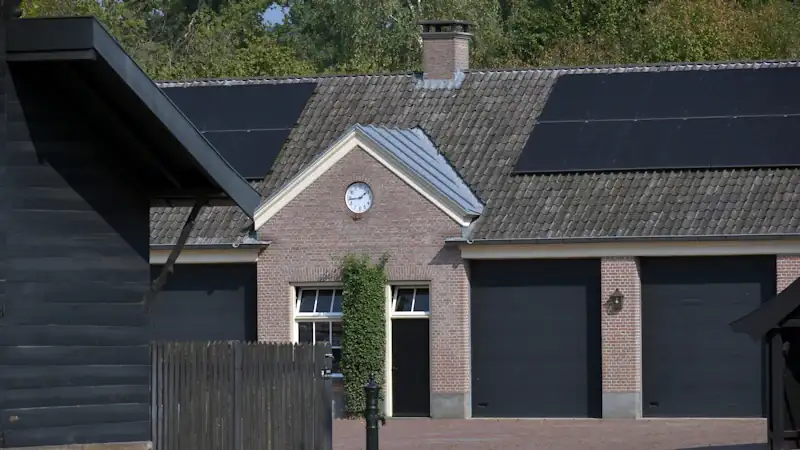 Solar
Solar panel prices in Belgium in 2026 (3, 4, 6 and 8 kWp)
How much does a solar PV system cost in 2026? Indicative prices by system size, what makes the price vary and how to read a quote without unpleasant surprises.
7 min
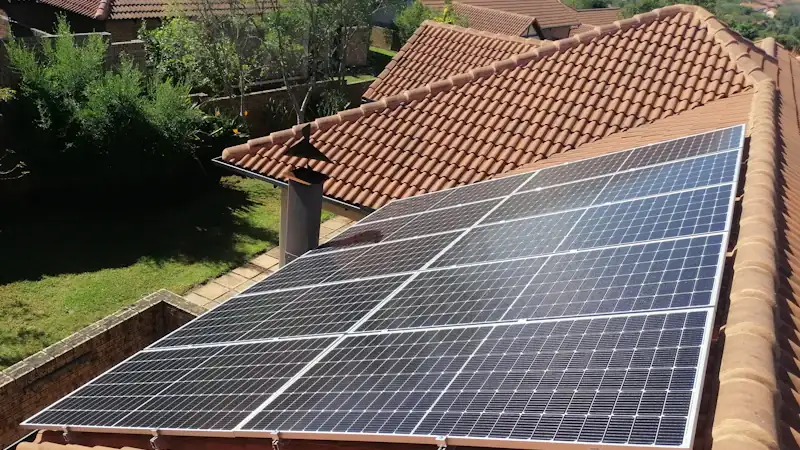 Solar
Are solar panels still worth it in Belgium in 2026?
End of the reversing meter, digital meters, prosumer and capacity tariffs, green certificates: what really determines the return on a solar system today in Brussels, Wallonia and Flanders.
7 min
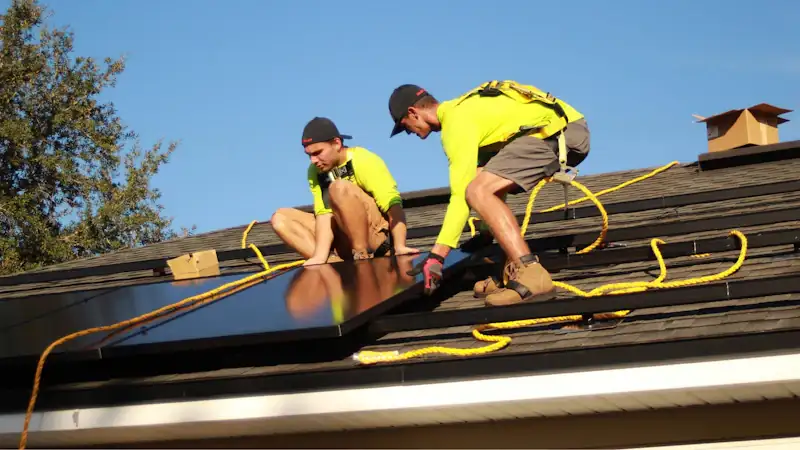 Solar
Choosing a solar installer in Belgium (RESCert, quotes, pitfalls)
Certification, quotes, warranties, paperwork: what to check before trusting a solar installer with your roof, and the warning signs to look out for.
6 min
Other projects in mind?
Home battery
Store your solar power and use it in the evening.
Prices, grants and quotesEV charger
Charge your electric car safely at home.
Prices, grants and quotesHeat pump
Heat your home without gas or heating oil.
Prices, grants and quotesRoofing
Renovate and insulate your roof for years of peace of mind.
Prices, grants and quotes
Your solar panels project, estimated in 2 minutes
Two minutes for a first estimate, an adviser to check it, up to three quotes to decide.