
Solar
Are solar panels still worth it in Belgium in 2026?
End of the reversing meter, digital meters, prosumer and capacity tariffs, green certificates: what really determines the return on a solar system today in Brussels, Wallonia and Flanders.
By the RhinoEnergy advisersUpdated on 7 min read
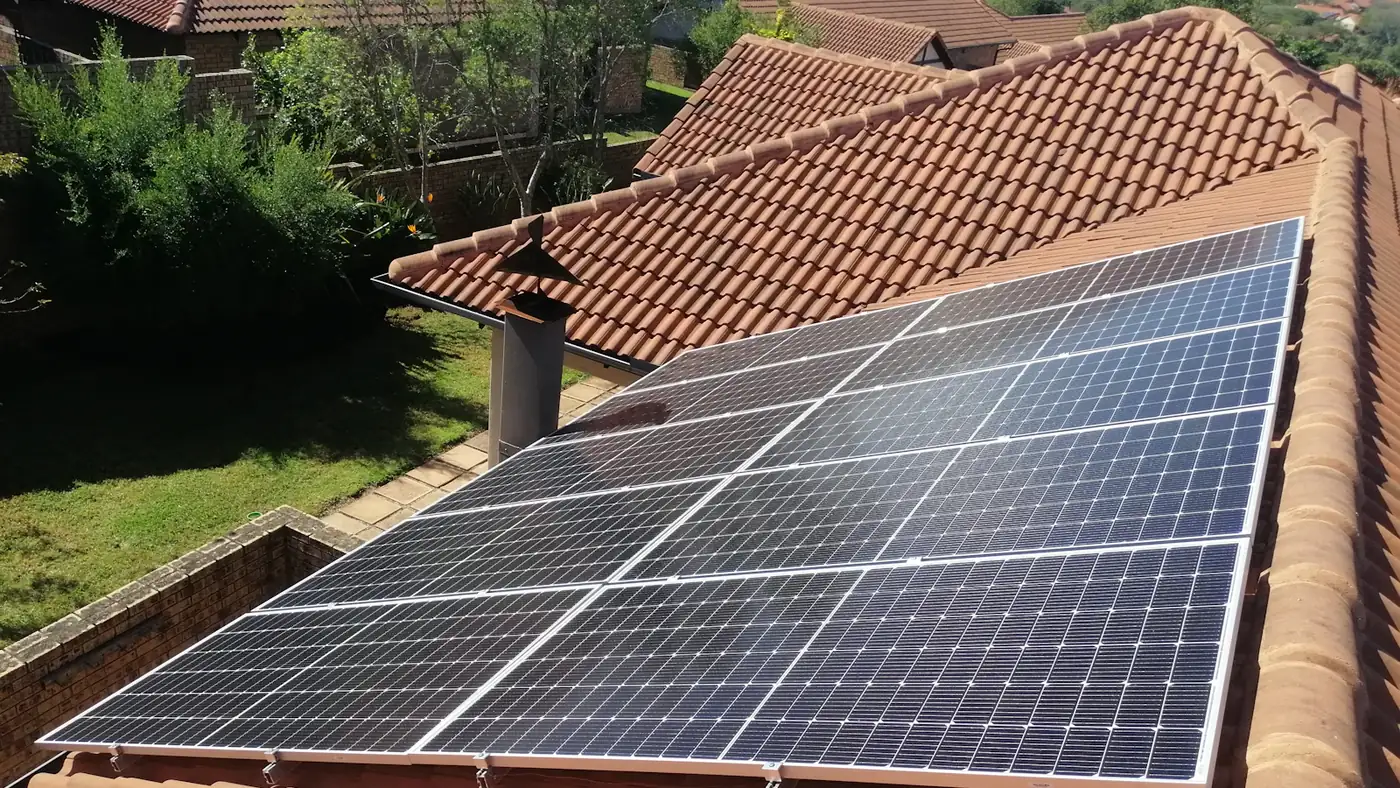
Are solar panels worth it in Belgium? The answer is still yes for most houses, but the way the return is earned has changed. Ten years ago, people talked about meters running backwards and generous grants. In 2026, what matters is the share of the electricity you produce that you actually use yourself.
Between the end of net metering, digital meters, the Walloon prosumer tariff, the Flemish capacity tariff and Brussels green certificates, the rules differ from one region to another and from one installation to the next. This article sets out, without unrealistic promises, what makes (or loses) money with a solar system today.
The principle: use it rather than export it
Every kWh your panels produce can go one of two ways:
- it is used straight away in the home (self-consumption): you avoid buying that kWh from the grid at the full price, including taxes and network charges;
- it is exported to the grid when you are not using it: your supplier then buys it back at a much lower price, which only covers the "energy" component.
The gap between the two is considerable. As an order of magnitude, a kWh drawn from the grid often costs between €0.25 and €0.40 including VAT depending on your contract, while an exported kWh is often worth only a few cents. A kWh you use yourself is therefore worth several times more than one you export.
| Item | Indicative value per kWh | What makes it vary |
|---|---|---|
| Self-consumed kWh | €0.25 to €0.40 (price avoided) | Contract, network tariff, region |
| Exported kWh | a few cents | Supplier's buy-back offer, dynamic contract |
| Green certificate (Brussels, per MWh) | around 2 certificates, often sold for about €85 to €95 each | System size, commissioning date, market |
Without a battery, a household typically self-consumes 25 to 40% of its output. With good habits and a few smart-controlled appliances, you can aim higher.
In Wallonia: end of net metering and the prosumer tariff
Wallonia distinguishes two situations, depending on the date the system was commissioned (the date of the compliance inspection).
Systems commissioned before 1 January 2024
These keep net metering until 31 December 2030: over the year, the electricity exported is deducted from the electricity imported. In return, these prosumers in principle pay a prosumer tariff, a grid-use charge based on the inverter's capacity (in kWe). For 2026, the CWaPE approved amounts of around €85 excluding VAT per kWe with ORES and RESA, slightly less with some other operators. Households with a smart meter can opt to be billed on their actual imports instead of this flat charge. The Walloon regulator explains how it works on its prosumer tariff page.
Systems commissioned since 1 January 2024
No more net metering, but no prosumer tariff either. A smart meter, which records imports and exports separately, is mandatory and fitted free of charge. You pay network charges only on the electricity you actually import, and you can sell your surplus to a supplier or share it (energy sharing).
The upshot: in Wallonia, a new system is sized on actual consumption and pays for itself through self-consumption. There are no longer green certificates or a regional purchase grant for residential systems.
In Flanders: digital meter and capacity tariff
Flanders ended the "reversing meter" (terugdraaiende teller) for new systems several years ago, and Fluvius has since been replacing the remaining analogue meters of existing prosumers with digital ones. With a digital meter, imports and exports are counted separately: the prosumer tariff disappears, you are paid an export fee by your supplier for the electricity you feed into the grid, and you pay for every kWh you import.
Since 1 January 2023, part of Flemish network charges has also been calculated through the capacity tariff (capaciteitstarief): it depends on your average monthly peak demand over the last 12 months, with a minimum billed on the basis of 2.5 kW. Solar panels do not reduce this peak much, since the highest peaks usually occur in the evening or in winter, but spreading out heavy appliances does. The Flemish regulator explains the mechanism on its capacity tariff page.
As in Wallonia, there is no longer a regional subsidy for small residential systems in Flanders, and solar panels are not covered by Mijn VerbouwPremie. The return therefore rests almost entirely on self-consumption.
In Brussels: green certificates and self-consumption
In Brussels, net metering was abolished in 2021 for all systems, and each installation has a meter that records exports and imports separately. The surplus is sold to the supplier at the price of the energy component.
The region does, however, maintain strong support: green certificates. They are awarded for 10 years based on the system's actual output and can be sold on the market or, failing that, to Elia at a guaranteed minimum price. For a residential system, you can count on around 2 certificates per MWh produced.
The 2026 changes to know about:
- award coefficients fall for systems commissioned from 1 April 2026 above 5 kWp (around 11% less between 5 and 36 kWp), but remain unchanged up to 5 kWp;
- since 1 January 2026, a system up to 5 kWp must be installed by a RESCert PV-certified installer to qualify for green certificates.
Brussels Environment sets out these new green certificate measures and states that the scheme still targets a payback of about 7 years. In practice, Brussels is currently the region where a small residential system pays for itself fastest.
Worked example: a house with 4 kWp
Here is a simplified example for a family using 4,000 kWh a year, with a 4 kWp system producing around 3,600 kWh. The figures are orders of magnitude, not a promised return.
| Assumption | Wallonia or Flanders (2026 system) | Brussels (2026 system) |
|---|---|---|
| Indicative cost incl. 6% VAT | €5,000 to €6,800 | €5,000 to €6,800 |
| Self-consumption (35%) | around 1,260 kWh | around 1,260 kWh |
| Saving on the bill | around €380 to €440 a year | around €380 to €440 a year |
| Sale of surplus (2,340 kWh) | a few tens of euros a year | a few tens of euros a year |
| Green certificates | none | around 7 certificates a year for 10 years |
| Indicative payback | 11 to 14 years | 5 to 7 years |
If this family raises its self-consumption to 50% by shifting usage, the payback outside Brussels shortens considerably. For investment costs by system size, see our detailed article on solar panel prices in Belgium.
How to improve your system's return
The return is not only decided at the time of purchase. These are the most effective levers:
- Size it right: aim for output close to your consumption, without oversizing.
- Shift consumption to daytime: washing machine, dishwasher and tumble dryer on a timer.
- Control the electric water heater so it heats with your solar surplus.
- Charge your electric car during the day, with an EV charger that can follow your solar output.
- Pair it with a heat pump: its consumption, especially for hot water, absorbs part of the surplus.
- Consider a battery, but only after using the free levers: it is expensive and its return is debatable (see our analysis is a home battery worth it?).
- Compare export offers and contracts: buy-back prices and dynamic tariffs vary a great deal between suppliers.
When is a system less worthwhile?
Solar panels are not a good deal for everyone. Be cautious if:
- your roof is heavily shaded or faces due north;
- your consumption is very low and concentrated in the evening;
- your roof needs redoing in the next few years (the panels would then have to be removed and refitted);
- you plan to move soon, even though a system generally adds value when you sell.
In these situations, an adviser can help you decide whether to start with insulation, the roof or another job. The support available for each type of work is summarised on our energy grants page.
Run the numbers for your home
Every situation is different: region, commissioning date, orientation, consumption, habits. At RhinoEnergy, an adviser calls you back within 24 working hours to analyse your project, check the support available and put you in touch with up to 3 certified installers. It is free, with no obligation, and your data is never sold. Request your assessment and quotes.
Frequently asked questions
Are solar panels still worth it in Wallonia or Flanders without net metering?
Yes, in most cases, but the payback period is longer than it used to be, often around 8 to 14 years. It all depends on the share of output you use directly. A well-sized system, combined with daytime use of appliances, remains worthwhile over a lifespan of 25 years or more.
Do I have to pay the prosumer tariff on a recent system?
No. In Wallonia, systems commissioned since 1 January 2024 do not pay the prosumer tariff: network charges are based on the electricity actually imported, thanks to the smart meter. In Flanders, the prosumer tariff disappears once a digital meter is fitted. The prosumer tariff only concerns older Walloon systems that still benefit from net metering.
What happens in 2031 to older Walloon systems?
Net metering ends on 31 December 2030 for systems commissioned before 2024. They will then switch to the same regime as recent systems: self-consumption, network charges on actual imports and sale of the surplus.
How much do green certificates earn in Brussels?
A residential system receives around 2 green certificates per MWh produced, for 10 years. For a 4 kWp system, that generally means 7 to 8 certificates a year, sold on the market or to Elia at the guaranteed minimum price. The coefficients are reviewed periodically: check the rules in force on your commissioning date.
Is a digital meter mandatory?
In Wallonia, it is mandatory for any new system commissioned since 2024 and fitted free of charge. In Flanders, every new solar system gets a digital meter and Fluvius is replacing the remaining reversing meters. In Brussels, solar systems have separate metering of exports and imports, and Sibelga is gradually rolling out smart meters.